Press Archive
Eat my heart on The Feast!
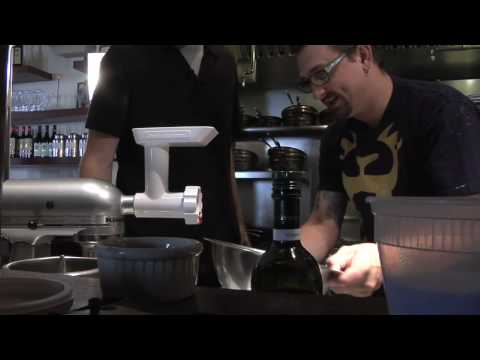
July 6, 2011 on 11:35 pm | In Blog, Offal, Press, Videos | 2 CommentsView more videos at: http://www.thefeast.com.
This is a video I did for The Feast for valentines day, its a bit old but I thought I would share it anyways.I cant get enough of the heart tartare, but with the foie gras it’s over the top.
Pairings with Ben Harper
May 15, 2011 on 9:42 am | In Blog, Press, Videos | 2 Comments
This was one of the most amazing events I have ever done. 170 guests, outside event with a live acoustic set by Ben Harper after dinner was amazing. To have Ben dedicate and sing me into a song was a priceless moment I will never forget. Thanks to all the amazing staff of chefs and great friends who helped me cook this event. I hope you enjoyed it as much as I did.
Pairings unites the world’s premier musical artists, chefs and winemakers in the creation of once-in-a-lifetime events and live performances across the globe. Visit DOWNLOAD THEIR DINNER PARTY PLAYLIST (WITH SELECTIONS FROM NORAH JONES TO COLDPLAY AND THE PROPELLERHEADS), created especially by us for Napa Pairings with Chris Cosentino, Ben Harper and Franciscan Winery.

Guts, Fame, and Exciting Tripe
July 6, 2010 on 9:20 pm | In Blog, Offal, Press | No CommentsI am always nervous when I read a review about what we do at Incanto. But this one was different, not because it was a good review, but because they understand what I am trying to do.

Guts, Fame, and Exciting Tripe
While Lessley was off investigating vegan Mexican food in the Mission, I was on the polar opposite journey, going to Chris Cosentino’s manly meat temple Incanto. Now, it would be easy to get all cynical and dismissive about the restaurant since the chef (and Food Network star) was in the dining room signing autographs and taking photos with some fans while I was eating, but why get all petty when the food can speak for itself, and it’s saying loud and clear: AWESOME.
 Case in point: a tripe stew. I’m not a tripe hater. I like it in pho, since it sort of acts, texturally, like a meat noodle, but I’m not excited about it. I ordered the grilled trippa appetizer for that reason, since Cosentino has really done a lot of work toward making offal more accepted (and even glamorous), and I wanted to see if it was possible to get excited about tripe. And it was. A bowl showed up with a deeply savory broth, tender slices of grilled tripe that tasted and chewed like a meaty mushroom, crunchy pieces of bacon, and a pile of ancho cress thrown on top that, when mixed in, wilted perfectly into the soup, giving it a nice peppery flavor. I was going back to it to sop it up with the bread.
Wine-wise, a fun idea was the “mystery flight” on the menu. Three generous pours arrived for $15. And I appreciated that the restaurant put a little paper tag around the base of each glass with the wine info printed on it, so you could actually take it home to remember it.
Over the top but delicious: a big slice of seared foie gras served on—wait, that wasn’t toasted bread—a breaded, fried trotter. Ridiculous, yes; delicious for sure. And the side of sliced strawberries, crunchy rhubarb, and tiny purslane leaves with a sweet/salty/tangy rhubarb mostarda showed a lot of love put into the nonmeat items, too.
Another game-changer for my prejudices: the stinging nettle and morel risotto. I think I’ve just had a lot of terrible, gluey risotto and now I avoid it. But in the spirit of the tripe, I ordered the thing I thought I’d like the least. It was the right move. Bright, bright green risotto arrived with a handful of morels on top. The nettle flavor was strong, giving the risotto a deep earthiness, which was intensified by the mushrooms. It was really, really rich and creamy. I will be going back for that dish.
The other thing that I was curious about was a mysterious “hayoli.” It was just what it sounded like: aioli made with oil that had been infused with hay. It tasted like extremely grassy olive oil, sharp and peppery. It was served dabbed on tender braised beef cheeks, which came with a tangled mass of salad made with shaved tongue, rucola greens, and peas … oh no, not peas at all. They were tiny, sour green grapes, which burst with a crazy intense acidity in the mouth: exactly what the rich dish needed, delivered in an unexpected way.
Incanto is a restaurant that can change your mind about foods you don’t think you like, and that’s a good thing. And really, who am I to judge things anyways, since I was the jerk shoving a camera into the risotto in a crowded restaurant? (Sorry, but I couldn’t bring myself to turn the flash on and be a real ass, so the pictures are not the best.)
Posted on Monday, July 5th, 2010 by Roxanne Webber
Skoal!!!!
March 2, 2010 on 12:51 pm | In Blog, Press | No Comments
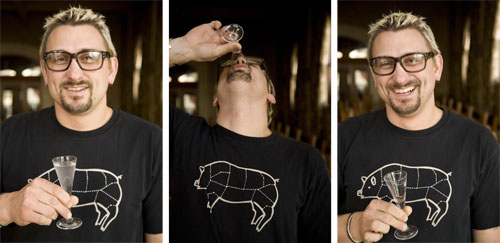
To have a shot of aquavit at 11am in the morning is not how I like to start my day, but when David Arnold called and asked me to do this shoot I jumped at the chance.His thought is you can learn a lot about a person from their skoal. Read below to learn about Skoal. Or go to Cooking Issues Website to see more Skoal photos and get the full treatment.
Straw man
March 1, 2010 on 11:37 am | In Blog, Press, Recipes | 2 CommentsHere is a great article written by my friend Daniel Patterson about cooking with hay. I could go on and talk about cooking with hay but I could never do it as well as daniel so I am going to leave it alone and let you read his well written piece .

Straw man
A barnyard staple takes a surprising turn in the kitchen.
It’s difficult to think of a product more symbolic of agrarian life than hay. As someone who has spent a fair amount of time tromping around farms, I’ve seen quite a bit of it—in barns, bundled in fields, used in displays—but I’d never thought of hay as a culinary ingre dient. Until now.
Hay is one of the most exciting and unexpected additions to my pantry in recent memory. It’s not a new idea, though: Hay has been used for centuries in French and Italian cooking, where large cuts of meat are buried in it and roasted either in the oven or in the dying embers of a fire.
In this country, hay has traditionally played a supporting role. The hay-box cooker has been used for more than 100 years, particularly during World War II as a way to conserve energy. The technology is simple: Bring a covered pot—preferably heavy metal or ceramic—full of food and liquid to a hard boil, then transfer it to a box packed with hay and cover it. The hay keeps the heat in the pot, so in four to eight hours, the stew will be cooked, sans fossil fuels.
From a practical standpoint, hay makes a great cooking medium, keeping heat in and diffusing temperature changes. But it’s the flavor that makes hay an extraordinary ingredient to work with. The taste is sweet and herbaceous, and the aroma is incredible, evocative of farms, pastures, and spaces vast and green and far removed from the city.
The idea came from a conversation with my sous-chef. We were trying to find a new way to cook carrots, and he recalled working in a restaurant in France where the chef cooked pork with consommé and hay for hours at a low temperature, until the meat was tender and the broth an elixir. It seemed like roasting carrots in hay would yield similarly delicious results, so the next weekend at the farmers’ market, I found myself shoving a gigantic bale of hay into the backseat of my car.
Back at the restaurant, we used the hay to made a stock. We burned some of the ends first, to give the stock deeper flavor, then covered the hay with water and let it simmer for about an hour. We tossed in young carrots with olive oil and salt, then combined them with hay and a little hay stock in a heavy enameled-iron pot and cooked them for about 30 minutes at 300°F, until they emerged tender and aromatic. It’s a simple process that can be done with any root vegetable.
Hay has made occasional appearances on American menus over the years. Chris Cosentino, the chef at Incanto, recalls a dish offered years ago at Red Sage, in Washington, D.C., where leg of goat was covered with a mixture of hay and clay, then baked—another traditional European technique. Cosentino, who was inspired to buy his own hay, first used it to cook a whole leg of pork. His menu currently features rabbit braised in hay that he serves with nettles and carrots. “People love the flavor,” Cosentino says, “and the aroma is amazing. Every time we pull one out of the oven, you can smell it across the dining room. It’s intoxicating.”
There’s not much to know about cooking with hay. The easiest way to use it is to throw a little into a stew as it simmers, then remove it before serving. If you roast with it, you should first soak the hay in water, then lay it down as a thick bed for the meat or vegetables. Burning the ends of the hay will give the dish subtle smokiness and depth. You can cover your main ingredient with the hay or not; adding a bit of liquid to the pot will ensure that it doesn’t burn. And if you’re considering eating the hay itself, I wouldn’t. The flavor is great, but unless you’re a farm animal, the texture leaves much to be desired.
Most farms and farm-supply stores carry hay, but because you’ll use it in direct contact with food, make sure it hasn’t been treated with chemical pesticides. And beware: Before you place your order, stake out some serious storage space. A bale of hay is enormous.
At Coi, we haven’t made much of a dent in our stash, which means that there will be hay on the menu for quite a while. So far, we’ve infused oil with hay and used it to confit suckling pig, reserving some of the oil to drizzle into the sauce. We’ve ground salt and hay together to make a crust for beets. We’ve infused it into onion soup, its presence magically transforming a standard flavor into something fascinating and delicious. Hay might not be the same workhorse in the kitchen that it is on the farm, but in my pantry, hay has found a comfortable second home.
CHRIS COSENTINO’S
Rabbit braised with hay
The chef at Incanto likes to poach baby carrots in the braising liquid to serve alongside the rabbit.
INGREDIENTS
2 2½- to 3-lb. rabbits, each divided into six pieces
Salt and freshly ground black pepper
½ cup flour
3 Tbsp. olive oil
1 onion, peeled and cut in half
1 carrot, peeled and cut in half
1 head fennel, cut in half
1 head garlic, cut in half
½ cup white wine
1 fresh bay leaf
1 handful of hay
2 qt. chicken stock
DIRECTIONS
1. Heat the oven to 250°F. Season rabbit pieces with salt and pepper, then dust lightly with flour.
2. In a Dutch oven, heat the oil over medium heat. Sear the rabbit pieces one or two at a time, taking care not to crowd the pan. When the pieces are golden brown, remove and set aside.
3. Add the vegetables and cook until they just begin to brown.
4. Add the wine, bring to a boil, reduce to a simmer, and let cook until it’s reduced to about 2 tablespoons, occasionally scraping the bottom of the pan to loosen any browned bits.
5. Add the bay leaf and hay. Set the rabbit pieces on top of the hay, add the chicken stock, cover the pan, and braise in the oven until the rabbit is tender, about 1½ hours.
6. Transfer the rabbit pieces to a platter and serve warm.
Makes 6 servings
Daniel Patterson is the chef-owner of Coi and a partner at Cane Rosso.
Food & Wine Magazine on healthy
February 23, 2010 on 2:23 pm | In Blog, Press, Recipes | 1 Comment
F&W’s editor in chief Dana Cowin challenges some of her favorite chefs, all masters of indulgent food, to create healthy recipes that even a sausage fetishist would lust after.
By Dana Cowin
Burgers. Fried chicken. French fries. Steak. On menus worthy of dozens of passionate reviews by bloggers and Yelpers, these are the dishes that generate the buzz. I love these foods. Love.
Some people will travel to France to eat at a Michelin three-star restaurant—and I’m not saying that I wouldn’t—but I’ve always been just as happy to travel anyplace I’m promised great fried chicken. In Manhattan, I’ve cracked the crust on the spicy Korean-style wings at Mad for Chicken on 32nd Street, and I’ve rhapsodized about the delicate version at Jean-Georges Vongerichten’s Perry St., where his son, Cedric, is chef; I’ve also gorged on splendid fried chicken all around Nashville. So it’s with tremendous respect for these marvelous dishes that, as editor-in-chief of F&W, I pose this challenge: Chefs, can you please lighten your food?
While dishes like fried chicken and their buttery or carb-loaded counterparts are super-popular and well-priced, I actually don’t want to eat three days’ worth of calories in one sitting. I’ve gradually lost a taste for too much of that kind of food, and I believe other people eventually will, too. Yes, most restaurants offer a green salad (which, depending on the dressing or mix-ins, still might not make Dr. Oz happy) or a simple vegetable side dish (which often comes with liberal amounts of cheese or pancetta, or both). And yes, there’s usually some kind of fish, but eating it generally feels like a compromise when everyone else at the table is poking their hand-cut, twice-fried chips into house-made ketchup and figuring out how to get their mouths around an unusually large lamb slider. Why can’t foods that are good for you be as cravable as the deep-fried, bacon-wrapped hot dog at Manhattan’s PDT?
One common reply to that question is that fat equals flavor. But what about Thai food? That’s got a lot of flavor—bitter, salty, sweet, sour—and, in general, relatively little fat (just look at Su-Mei Yu’s recipes). Or Japanese food: It’s clean, and its flavors are bright. But, of course, those aren’t iconic American cuisines, which brings us to the second-most-common answer: People yearn for the foods of their childhood, and for many Americans, that means the hot dogs and hamburgers their parents grilled on the Weber in the backyard. Still, I don’t buy it. My favorite fried chicken is the kind I ate at home growing up, but I’m not thinking about that when I reach for the fourth wing at Mad for Chicken. I want it because it tastes fantastic.
Can’t something taste sublime without a burdensome amount of fat and calories? To find out, I went to some of my favorite chefs, the ones who have a cult following for their super-indulgent dishes, and asked them to create recipes that even a sausage fetishist would lust after. What I discovered at first isn’t exactly breaking news, but I’ll share it here anyway: Chefs don’t have a particularly good sense of fat grams or calorie counts. One chef suggested a recipe for a ravioli stuffed with parsnip and bone marrow (bone marrow is mainly fat). But one lovable quality of chefs is that they’re creative and solution-oriented. After some back-and-forth, F&W senior editor Kate Heddings had gathered a collection of six healthy recipes with that wow factor.
“I think chowder is the way to go,” said chef Linton Hopkins of Restaurant Eugene and Holeman and Finch Public House in Atlanta. “The very word chowder makes your mouth water.” This from a guy who adorned the entry of Holeman and Finch with a custom-made glass curing case full of pig legs. He came up with two ways to get a chowder’s creamy consistency without fat: adding cubed potatoes and using buttermilk. In Chicago, the Publican’s Paul Kahan chose spelt flour as his secret weapon (spelt is a grain that’s high in protein and fiber) after watching Chris Bianco of Phoenix’s Pizzeria Bianco—”a yeast-and-flour genius,” says Kahan—make spelt bread. Kahan’s spelt focaccia topped with squash, kale and just a few shavings of nutty pecorino is so good, I’d eat it like a pizza or as an appetizer/side dish combination.
At Gautreau’s in New Orleans, Sue Zemanick cooks indulgent dishes, but in her off-hours, she has a distinctly lighter approach. And in fact, when I spoke to her, she was just coming off a 13-day cleanse, vowing to do it four times a year. That disparity was so extreme that I was particularly impressed she was able to retain the essence of the food at Gautreau’s when coming up with a lightened recipe for grilled pork tenderloin with vegetable curry. In place of coconut milk (one cup of which has 552 calories, 479 of them from fat), she chose coconut water (more often thought of as a drink than a cooking ingredient) and combined it with two tablespoons of full-fat sour cream to get that luscious feeling. It’s a trick the F&W Test Kitchen is sure to remember and use in the future.
What I discovered from this group of recipes, perhaps not surprisingly, was that these talented chefs could make amazing healthy food. And some of them even had healthy dishes on their menus. For a while, Laurent Tourondel, who serves incredible beef and addictive onion rings and popovers at 11 BLT Steak restaurants around the world, offered a Thai green mango–crab salad. Did customers like it? I asked him. “It didn’t move,” he replied. “When people go to a steak house, they want steak. I love the crab salad, but they want steak.” Chris Cosentino of San Francisco’s offal-centric Incanto, though, had a different experience: His sardines are hugely popular. But perhaps that’s because bony, whole-fishy, charred sardines fit into the offal-lover ethos.
And this is the crux of the dilemma. When a healthy recipe matches the mood of the restaurant, it works. But right now, at most of the popular foodie establishments in America, light foods don’t make sense. What we need is a new paradigm: hip, affordable restaurants with a great vibe that reinvent healthy food and make it as cravable as a cheeseburger. I believe that change will come eventually, but until then, I’m going to be picking out the stealthily healthy dishes at restaurants—and making these phenomenal recipes at home.

Roasted Sardines with Olives, Capers and Parsley
Recipe by Chris Cosentino
Chris Cosentino of San Francisco’s Incanto is known for his offal dishes but a hearty fish like sardine, served whole, can also appeal to the nose-to-tail crowd. Cosentino pan-fries the omega-3-rich fish with an exhilarating mix of olives, capers, lemon zest, parsley and chiles. To make this more of a main course, he prepares a crunchy salad of artichokes and sunchokes to eat alongside.
Pairing SuggestionFish rich in omega-3s go best with unoaked wines with few tannins. For Cosentino’s tangy roasted sardines, try pouring a bright New Zealand Sauvignon Blanc, like the citrusy 2009 Brancott Marlborough, or a very light red, like the cherry-scented 2008 Georges Duboeuf Beaujolais-Villages.
Roasted Sardines with Olives, Capers and Parsley
TOTAL TIME: 45 MIN SERVINGS: 6
FAST HEALTHY STAFF FAVORITE
INGREDIENTS
1 lemon, halved, plus 1 teaspoon finely grated lemon zest and 2 tablespoons fresh lemon juice
6 baby artichokes
3/4 pound sunchokes, scrubbed but not peeled
3 tablespoons canola oil
18 fresh sardines (about 2 ounces each), cleaned and scaled
Salt and freshly ground pepper
2 garlic cloves, thinly sliced
3/4 cup green olives, such as Cerignola, pitted and chopped
3 cups loosely packed flat-leaf parsley leaves
2 tablespoons chopped oregano
2 tablespoons capers, drained
2 serrano chiles, seeded and minced
4 cups baby arugula (4 ounces)
2 tablespoons extra-virgin olive oil
DIRECTIONS
Preheat the oven to 400°. Fill a large bowl with water and squeeze the lemon into it. Snap off the green outer leaves of the artichokes until you reach the yellow leaves. Cut off the top third of each artichoke. Using a mandoline or a food processor fitted with the slicing blade, thinly shave the artichokes. Add them to the lemon water. Shave the sunchokes into the lemon water.
In a very large ovenproof skillet, heat the canola oil until nearly smoking. Season the sardines lightly with salt and pepper and add them to the skillet. Cook for 3 minutes, then flip the sardines and add the garlic, olives, parsley, oregano, capers, chiles and lemon zest. Transfer the skillet to the oven and roast the sardines for about 5 minutes, or until cooked through.
Drain the artichokes and sunchokes and pat dry. Return them to the bowl and add the arugula, olive oil and lemon juice. Season lightly with salt and pepper. Transfer the sardines and salad to plates and serve.
NOTES
One Serving 330 cal, 22 gm fat, 3 gm sat fat, 17 gm carb, 3 gm fiber, 19 gm protein, 810 mg sodium.
SFMOMA 75 years of Inspiration
February 15, 2010 on 1:29 pm | In Blog, Press | No CommentsThe idea of art being a form of inspiration, is so true. Looking at art evokes a response that can be emotional, inspirational of just sheer enjoyment. When I was asked by the SFMOMA to be a part of the MUSE campaign I had no idea that I would be paired with such an iconic artist such as Andy Warhol. I am Honored and humbled at the same time, I can still remember the first time I saw his works in DC, on a date with my now wife at the National Art Gallery. He took what everyone looked at as status quo and changed it, such a thing as a simple soup can or a portrait changed the way I look at food today. Thank you Mr Warhol for Inspiring me to never believe in status quo!!!
 |
Chris Cosentino and Self-Portrait by Andy WarholChris Cosentino, chef Chris Cosentino’s passion for food took seed well before he ever donned chef’s whites. He took his first executive chef position in 2002 at Incanto in San Francisco. His innovative interpretations of rustic Italian fare promptly earned the restaurant its first three-star review from the San Francisco Chronicle. Since then, Cosentino has gained national acclaim as a leading proponent of offal cookery. His approach stems from a belief that no part of an animal slaughtered for food should go to waste. Cosentino is committed to sustainable principles and humanely raised meats and is an avid researcher of ancient cooking techniques and culinary lore. Cosentino is co-creator of Boccalone, an artisanal salumeria. His passion for offal has led him to work on the definitive cookbook on the subject, aimed at providing essential instruction on the preparation of offal for both professional and home cooks. Andy Warhol, Self-Portrait, 1967; Collection SFMOMA, gift of Harry W. and Mary Margaret Anderson; © 2010 The Andy Warhol Foundation for the Visual Arts/ARS, New York
|
|---|
Walrus TV part 4
February 9, 2010 on 9:59 pm | In Blog, Offal, Press | No Comments
As you all know i have a long standing relationship with upper playground, and this is the final segment of our cooking art collaboration videos. Its perfect timing for the release, with valentines day being this weekend. I had the opportunity to work with n8vandyke, a great bay area artist with an honest interest in food. Take a look at the video below it was fun as always these guys have passion for their art like chefs do for their food.
Newport Life Magazine Cover Story Really?
December 1, 2009 on 9:18 pm | In Blog, Press | 4 Comments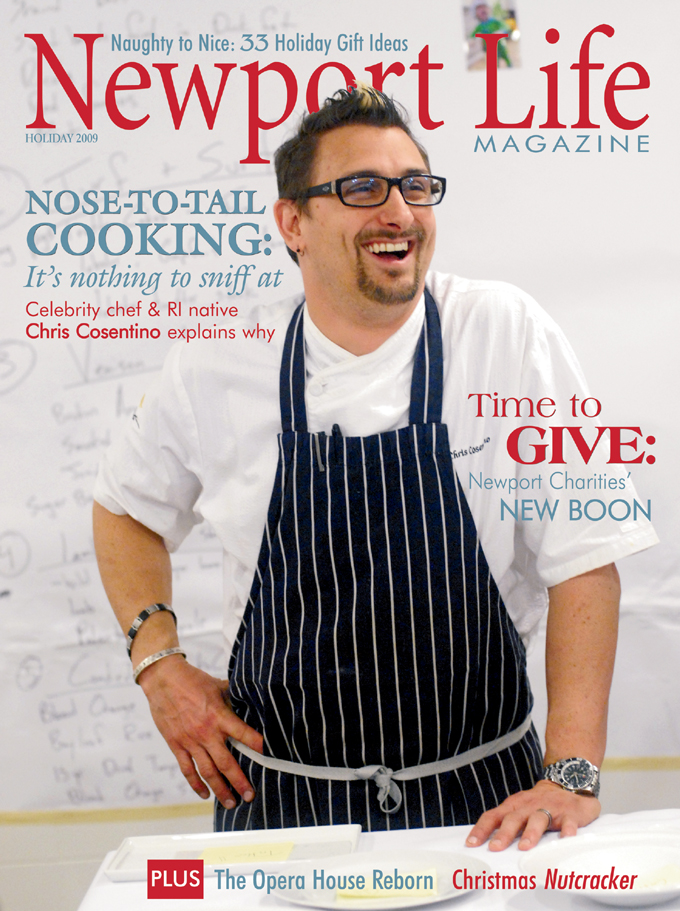
When I graduated from high school in 1990, It was said by most that I would end up in prison. That was the fire I needed to drive the train. So what did I do I put my head down and read cookbooks, and worked, worked and did I say work, then read a little more. Giving up vacations, family funerals and celebrations to push myself to succeed. There was even a bet of $10 grand that I would fail and come crawling home to Newport by a relative. By the way you owe me Auntie Sandy! So when I got a call fromNewport Life Magazine to do an interview I thought it was ironic. To read the interview click on the link below.
Newport Life Magazine NLM_HOL09_Cosentino

Recent Posts:
 Head 2 Tail 5.0 stages
March 6, 2013
Head to Tail stage 5.0February 19, 2013
 Adams head to tail 2012 experience
April 26, 2012
Bits and Bobbles:
 Show the world you're an offal eater.
Shop online!
 Become a Fan
Sign Up:
Powered by WordPress
Entries and comments feeds.
Valid XHTML and CSS. ^Top^