Blog
Do you have the guts to cook guts 3.0
February 8, 2011 on 2:32 am | In Blog, Events, Offal | 2 Comments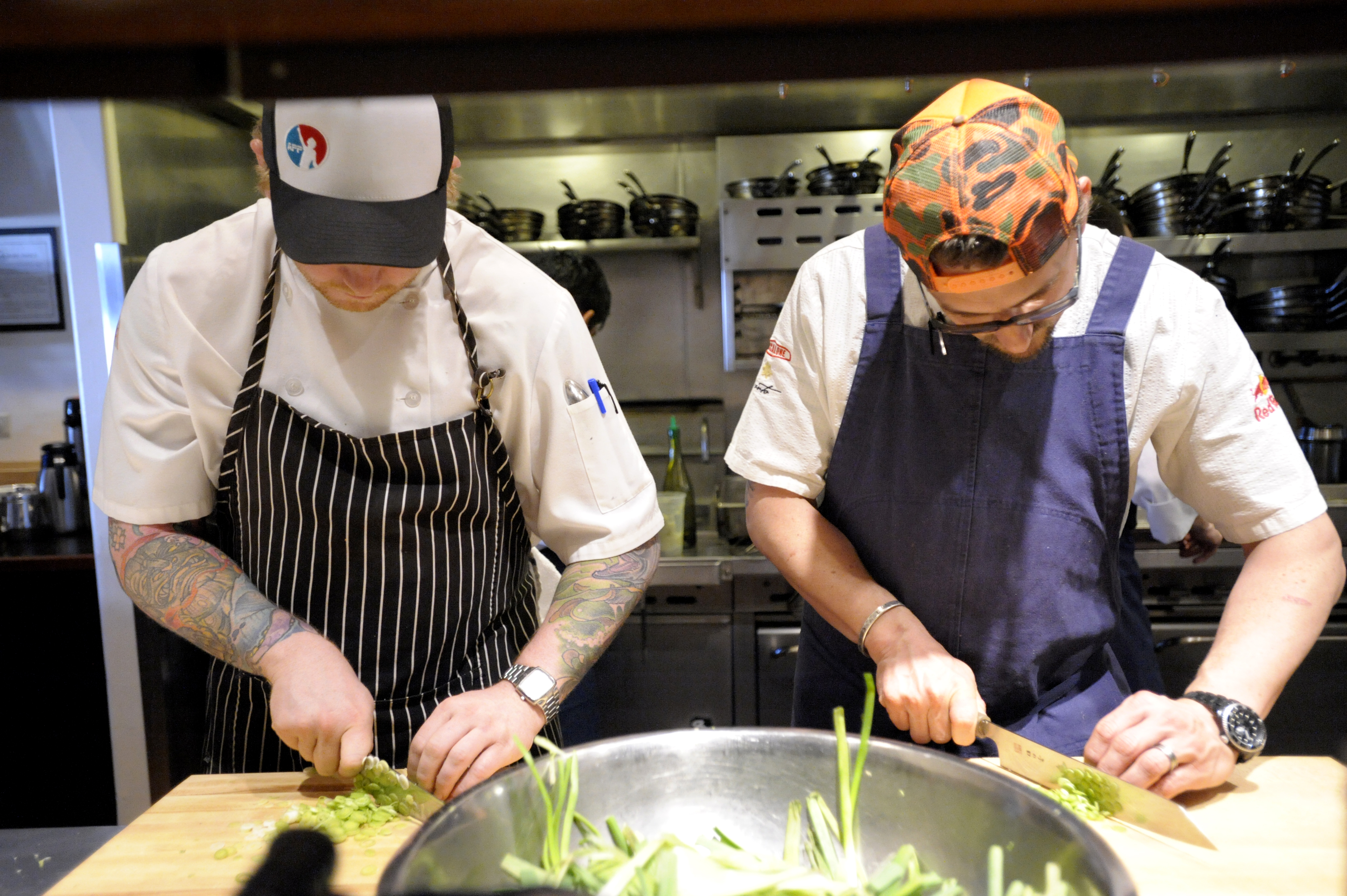
Derek & I prepping
After each years head to tail I look back and say how can we top that, and each year its a challenge that I gladly welcome. With the past 2 year we have brought in stages to spend a week cooking with the Incanto team, and it has been alot of fun and a great experience. Each stage has come and left their mark, thank you to Derek, Omar, Michael & Jonah!! So to continue on in that spirit we shall do it again, its time for someone else to come and play. This is all about sharing, inspired by the constant requests for knowledge about how to cook offal. Now’s your chance to learn. I will be accepting 2 volunteers to help with the event this year. You get to come into my kitchen and help cook 2 nights of head to tail dinners. You will work your ass off, have some fun and learn a ton, but there are rules to this game. This offer is open to professional cooks only. You will be an unpaid volunteer. You must commit to working in my kitchen for 5 days, from Friday, april 1st through Wednesday the 6th except for Tuesday, which you’ll have off to recover. You must submit your resume and a short essay on why you should be one of the chosen ones. This is a busy time and I don’t have time to be baby sitting. The Head to Tail dinner is a multi-course menu with a shit load of detailed work..
Here is the pay out; you get all 4 of my t-shirts to take home and you will be able to sit down and enjoy the head to tail menu in the dinning room on the last night. And you have to write a story for me to share on this website after your time here to share with the world. Jonah I am still waiting for yours, don’t make me call Paul.
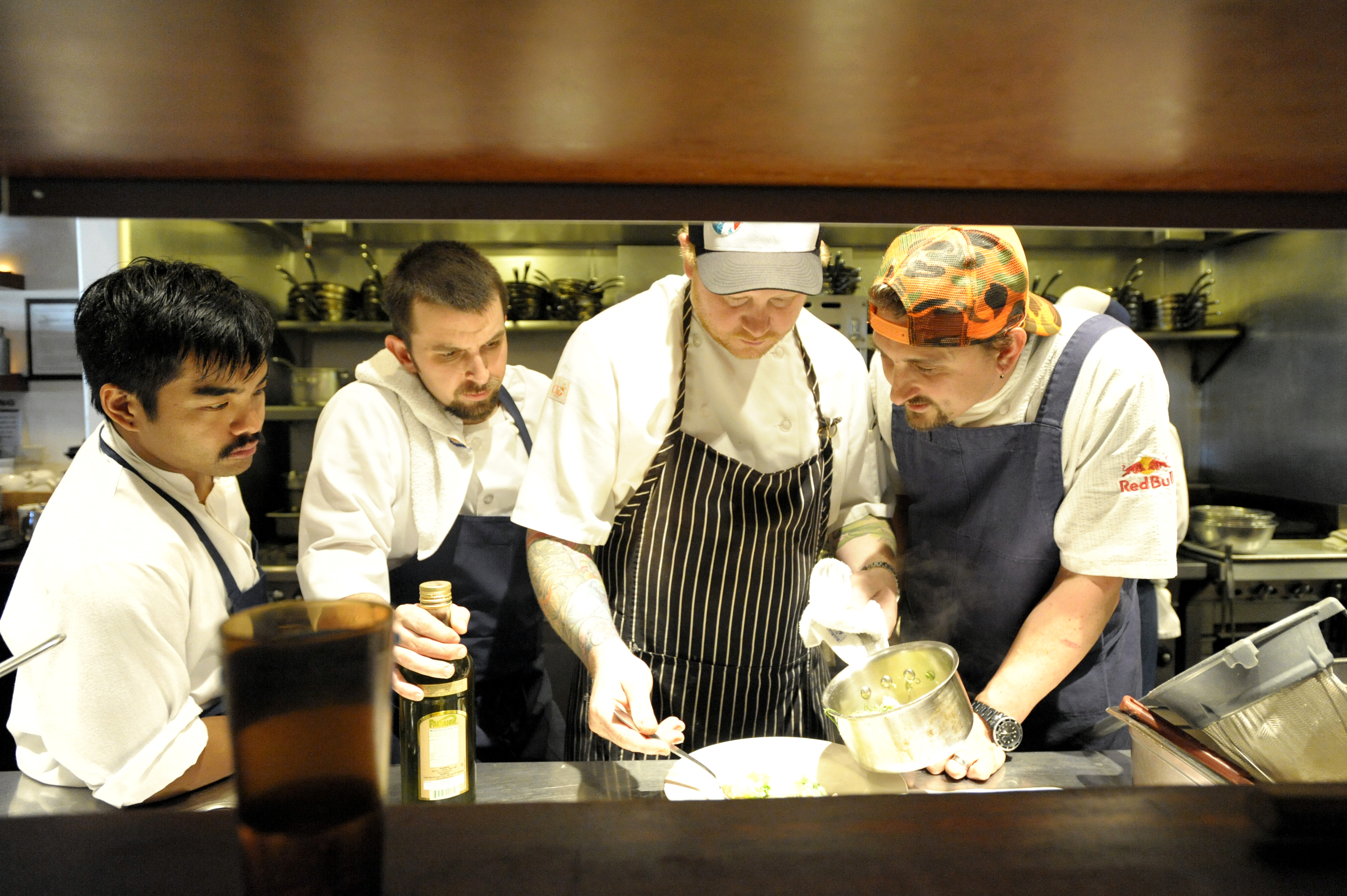
working out the plating
Email your resume and brief essay to me at [email protected] by friday March 4th. I will make a final decision and contact the 2 lucky winners on March 7th to confim your participation. This gives you 4 weeks to make travel arrangements. Ultimately, this is a fun opportunity to be a part of a great team for a week and learn how to cook some innards.
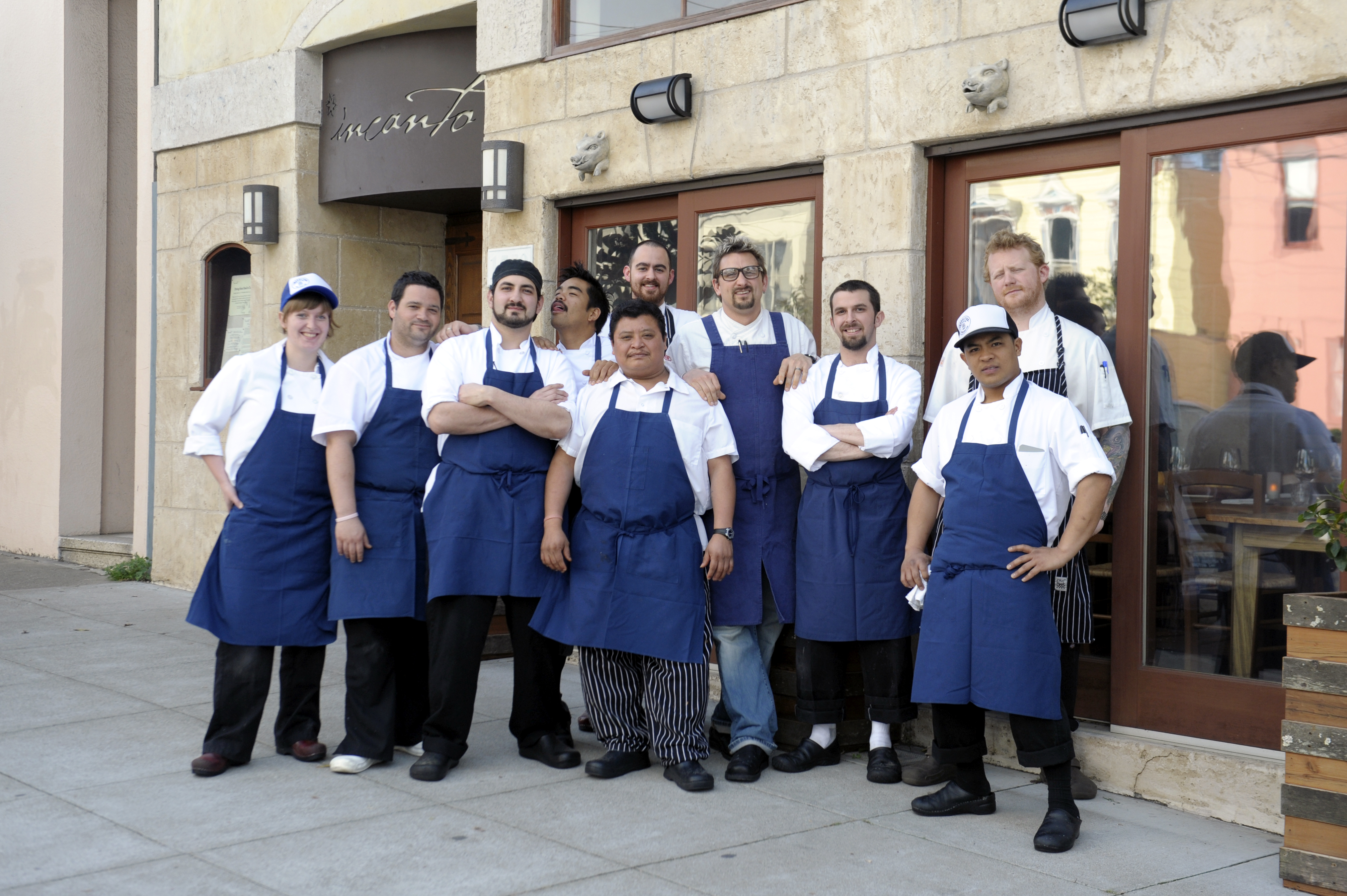
2010 head to tail team
Vanity Fair Interview
February 8, 2011 on 1:52 am | In Blog, Offal | 1 Comment

Q&A QUESTION TIME
Offal Chef Chris Cosentino Is Happy to Make a Meat Dress for Lady Gaga
by Eric Spitznagel January 27, 2011, 11:30 AM
Photograph by Lisa Hamilton (Cosentino), Kevin Winter/Getty Images (Lady Gaga).
Chris Cosentino, the executive chef at Incanto in San Francisco, wasn’t sure he wanted to talk to me. And I could understand his reticence. He may be a chef on the verge of mainstream fame, with frequent appearances on Food Network shows like The Next Iron Chef, Chefs vs. City and The Best Thing I Ever Ate. But he’s also a chef who cooks almost primarily with offal. If you’re not familiar with offal, it’s a word derived from the slaughterhouse phrase “off fall”, or the pieces that “fall off” a carcass when it’s being butchered. Things like brain and pancreas and lungs and spleen and other organs that aren’t, at least in the U.S., generally considered food. “It’s something that already has a bad rap,” Cosentino told me in a pre-interview phone call. “It’s a very touchy subject. So I don’t know if joking about it is the best plan.” I might normally agree with him. He’s had to contend with some unfair controversy in recent years, from threatening phone calls by anti-foie gras protesters to publishers unwilling to touch his landmark book on offal, Odd Cuts and Guts: Rediscovering the Rest of the Animal.
But there is evidence that Cosentino has a sense of humor about his culinary reputation. Last summer, he designed his very own fashion line called Gluttony Pants, with ever-expanding buttons labeled “Piglet,” “Sow” and “Boar.” And his personal website—which features graphic photo galleries of his kitchen staff’s adventures with goose intestines, turkey lungs, and an 85-pound pig’s head — is called “Offal Good,” which is nothing if not sublime food punnery. (What was his second choice, I wonder. “Happy Entrails To You?”)
Cosentino eventually consented to an interview, and he proved to be as laugh-out-loud funny as I’d hoped. But more surprisingly, he also made a pretty convincing case for offal. Probably the highest compliment I can give the man is that after listening to him talk about brains and haggis and tripe for almost an hour, I’m about 80 percent convinced. For Cosentino, I might eat a brain. But only if he cooked it. And then he’d need to be at the table with me, coaxing the fork towards my mouth, reminding me yet again that life doesn’t always imitate a Steven Spielberg movie.
Eric Spitznagel: Which genre of offal has the worst culinary reputation? Is it lungs? Brains? Tripe? Any animal head with the eyes staring back at you?
Chris Cosentino: It depends on the person. I think for a lot of people, texture is a big issue. We’re a culture of texture. Every country has its preferred food texture. What do you think our texture is?
I don’t know. McNuggety?
Our texture is crunchy. We like our potato chips, our tortilla chips, our french fries, our fried chicken. We’re not a culture of jiggly and soft. And a lot of offal is jiggly.
That’s very true with me. I’ll eat the hell out of some nachos. But there’s not enough hot sauce in the world to make me try cod milt.
I bet you fifty bucks I could make it for you and you’d never know the difference.
You’re going to lose that fifty bucks, friend. There’s no way in hell I’m eating fish sperm, no matter how you fancy it up.
It’s about perception versus reality. If you come into a restaurant and you have this perception that it’s going to be horrible and disgusting, you’ve already set the tone for what your experience is going to be. But if you shut your goddamn pie hole when you come in the door and you’re willing to try something different, you’ll have a better experience.
So your cooking aesthetic is “Stop asking questions and just eat it, you whining pussy?”
Exactly. Put away your perception and follow through on reality. The reality is, I spend all day getting things ready for dinner service. I’m not going to serve you something that tastes bad. My job is to create a lovely dinner experience for you.
How would you make cod milt seem appetizing, besides never mentioning what it is?
Cod milt is shirako, which is a very classical Japanese dish. It’s only available in the fall and winter, so it’s got a very short season. At Incanto, we call it Soft Roes on Toast.
Soft Roes on Toast? That’s linguistic trickery! So you just give it a name that sounds delicious?
Well, no, it’s not that simple.
I have the opposite problem with haggis. The name alone freaks me out.
What’s wrong with the name?
It’s weird. Haaaaggis. It sounds like an infected skin flap. “The doctor wants to have my haggis biopsied.”
No, no, no. It’s a Scottish delicacy. Oh my god. Do you eat McDonald’s?
Not anymore, but I did when I was younger.
There are much worse things in McDonald’s than there is in haggis. We have a bizarre perception in this country of what’s good food and what’s bad food. For some reason, we think McDonald’s is good food, even though we all know what’s in a chicken nugget nowadays, don’t we?
Do we?
What they do is, when a chicken gives birth-
Okay, okay, okay! I don’t want to know!
They take these little baby chickens and they gas them, and then they put them through a fucking extruder.
Oh Jesus Christ! You’re going to make me pass out, Chris.
Here’s a question for you. What does a beef tenderloin do?
Besides be delicious and go into my tummy? What do you mean?
Before it ends up on your plate. Where’s a tenderloin found on the animal? It’s on the underside of the spine, near the back end.
Are you telling me it’s ass?
It’s not ass. But it’s what helps pushed the turd out.
It’s a sphincter?!
No, no. The sphincter is the actual hole. This is the muscle above the colon. It’s one of those contracting muscles. People love their beef tenderloin. They think it’s the best cut in the world. But nobody asks what it does.
How exactly is haggis any better?
Haggis is oats and the sheep’s pluck. The pluck is the heart, the liver and the lung. It’s all ground, mixed in with oatmeal, and then popped into a stomach and cooked. It’s very classic, very beautiful. There’s nothing wrong with it when it’s made well. Unfortunately in this country, everyone has become horrified by it. But that’s because we don’t like what we don’t understand.
I’ll admit I don’t understand haggis. I don’t even understand how to eat it. Is it like a Scottish pinata?
No, no. Think about this: If you went to Africa and offered them a piece of cheese, they’d say you’re disgusting. Because you’re rotting milk. They work so hard to keep their animals healthy and safe for fresh milk, and what do we do? We take it and we rot it. Who’s wrong here? Nobody’s wrong. It’s perception. They feel that what we’re doing is gross, but we think it’s normal.
At least we’re not the world’s only culinary bigot. That’s saying something, right?
Yeah, but we’re the biggest wimps in the world when it comes to our food likes and dislikes. “Oh my god, somebody’s going to eat a dog, somebody’s going to eat a cat! That’s gross! You’re disgusting!” In some countries, those are the only protein options.
Have you ever eaten a dog?
I haven’t, but that’s just because I’ve never been put in that situation. If I was invited to dinner in another country and that’s what was presented to me, I’m not going to refuse it. Because that would disrespectful to the culture. You see what I’m saying?
I do. But if it gets me out of eating a Labrador meatloaf or Pug nuggets, I think I’m okay with being disrespectful.
If you didn’t know what you were eating, you might be surprised.
Your hypothetical dinner party scenario makes me think of that scene in Indiana Jones and the Temple of Doom, where they get served chilled monkey brains. What do you do in a situation like that?
That doesn’t really exist! That’s a Hollywood fallacy! People don’t do that! Christ, you’d have the military at your front door if you tried to serve raw monkey brains.
Don’t you serve brains at your restaurant?
Calf’s brains and pig’s brain and lamb’s brain, yes.
Not monkey brains? I’m feeling really disillusioned and confused right now. You’re telling me Steven Spielberg was lying?
Of course he was! It was Indiana Jones! It’s a movie! That’s like saying, “Is Jabba the Hut real?” Of course he’s not real! He’s a giant fucking alien with a gelatinous exoskeleton that oozes snot!
As a kid, you never wondered what Tauntaun guts taste like?
Maybe as a kid, sure.
But not an adult offal chef?
Oh my god! I bet you have a Tauntaun sleeping bag at your house.
I do. Let’s get back to non-fictional food. When somebody’s trying to coax me into trying a new or exotic dish, they’ll usually say it “tastes like chicken.” That can’t always be accurate, can it?
No, it’s not. It’s just an easy thing to say to make people feel comfortable. Do offal cuts taste like chicken? Not at all. Say a child is given some black and white paint. You can do amazing things with those two colors. But then you give that child a full palette of other colors. You give them the rainbow. What happens? Their eyes open, they get excited, they start mixing the colors, they get creative. When you have a skeletal cut of meat, there are only so many things you can do with it. Roasted, grilled, braised, it’ll still taste like beef. But with offal, you have different textures, different flavor nuances. It’s an entirely different dimension of taste.
I’m sincerely curious about brain, and not just because of the Indiana Jones movie. But I’m afraid. How would you talk me into it?
I would tell you to harden the fuck up and try it. It’s not like you’re going to a restaurant and they’re putting a pile of dog shit in front of you. You see what I mean? Nobody’s saying, “Here’s a big plate of broken glass.” It’s real food. In a lot of places in the world, this is food they eat every single day. In Asia and throughout Europe, these cuts of meat are part of their everyday diet. Why should we turn up our nose to what’s considered normal by the rest of the world?
I agree with that in theory, but I need more details. If brain doesn’t taste like chicken, what does it taste like?
It’s very creamy, very delicate, very pillow-like. It’s not unctuous whatsoever. Unctuous is a pig’s foot. A brain is rich and gelatinous. If you came to my restaurant, I’d make you something delicious. For you, I’d suggest calf brain picada, dipped in egg, with butter, wine, and capers. There are many different variations. I’ve done calf’s brains ravioli, calf’s brains on toast. You just need to try it, man.
You almost have me convinced, and then I hear that word, “brains.” All I can think about is Igor.
I’m not saying get a gigantic serving. That’s why we serve brain as an appetizer instead of an entree. And even then, it’s not the whole brain. I only serve half a brain. I know it can be daunting to people. That’s a lot of richness.
What about the old myth that eating brains makes you smarter? Any truth to that?
Oh my god!
Not so much?
I actually had a surgeon ask me that question. I looked him right in the eyes and said, “Seriously? You seriously just asked me that? You went to Harvard. You have a Harvard education and you’re asking me if calf’s brains are going to make you smarter?” There’s probably a more polite way to say it, but I was just shocked. I was like, “I do not want you performing any form of surgery on me. I would rather die.”
I’m guessing you’ve heard enough zombie brain-eating jokes to last a lifetime.
Every time with the zombie jokes. Can I jump on my knife a few more times and just end it all? Fuck me. It’s so stupid and childlike. But the worst is when it’s something like testicles. I don’t care if they’re 20 or 70, they act like 12 year old boys. [With a Beavis and Butthead voice.] “Huhuhuhuh. You’ve got balls on your plate, dude.” And then if there’s a girl at their table, she’ll say, “I dare you to eat it!” And then the guy says “Shut up! You won’t eat them!” And she glares at him with an expression that’s like, “Well…”
Wow. So it’s basically an anatomy of a relationship by way of a plate of testicles?
Yeah, exactly. There’s a lot of subtext happening in that conversation.
Let’s talk about Lady Gaga and meat dresses. You saw the outfit she wore at last year’s MTV Video Music Awards, right?
Sure, yeah.
She went with some rather conventional cuts of meat. With the Grammies coming up in February, she’s probably hoping to outdo herself. If you were designing a meat dress for her, what ingredients would you use?
The biggest error she made last year, aside from wasting all that meat, is that it didn’t look very nice. I’d have done something different. First thing, she needs some lace stockings. Which is easy. You take caul fat, the fatty membrane around organs, and stretch it out really thin. It looks exactly like lace. It’s absolutely beautiful. And then, for her dress, I’d recommend tripe. It’s all white, very elegant, and it wouldn’t drip blood everywhere. You could use the extra tripe to make a handbag. Just use some bone for the handles. It’s very sophisticated.
I think this needs to happen. If Gaga’s interested, would you make her a tripe dress for the Grammies?
Absolutely, sure, why not. Put me in contact with her, I’ll have that meeting.
Michael’s head to tail experience
July 11, 2010 on 8:34 pm | In Blog, Offal | No CommentsIt was a joy to have Michael in the kitchen, I hope it was all he wanted it to be.
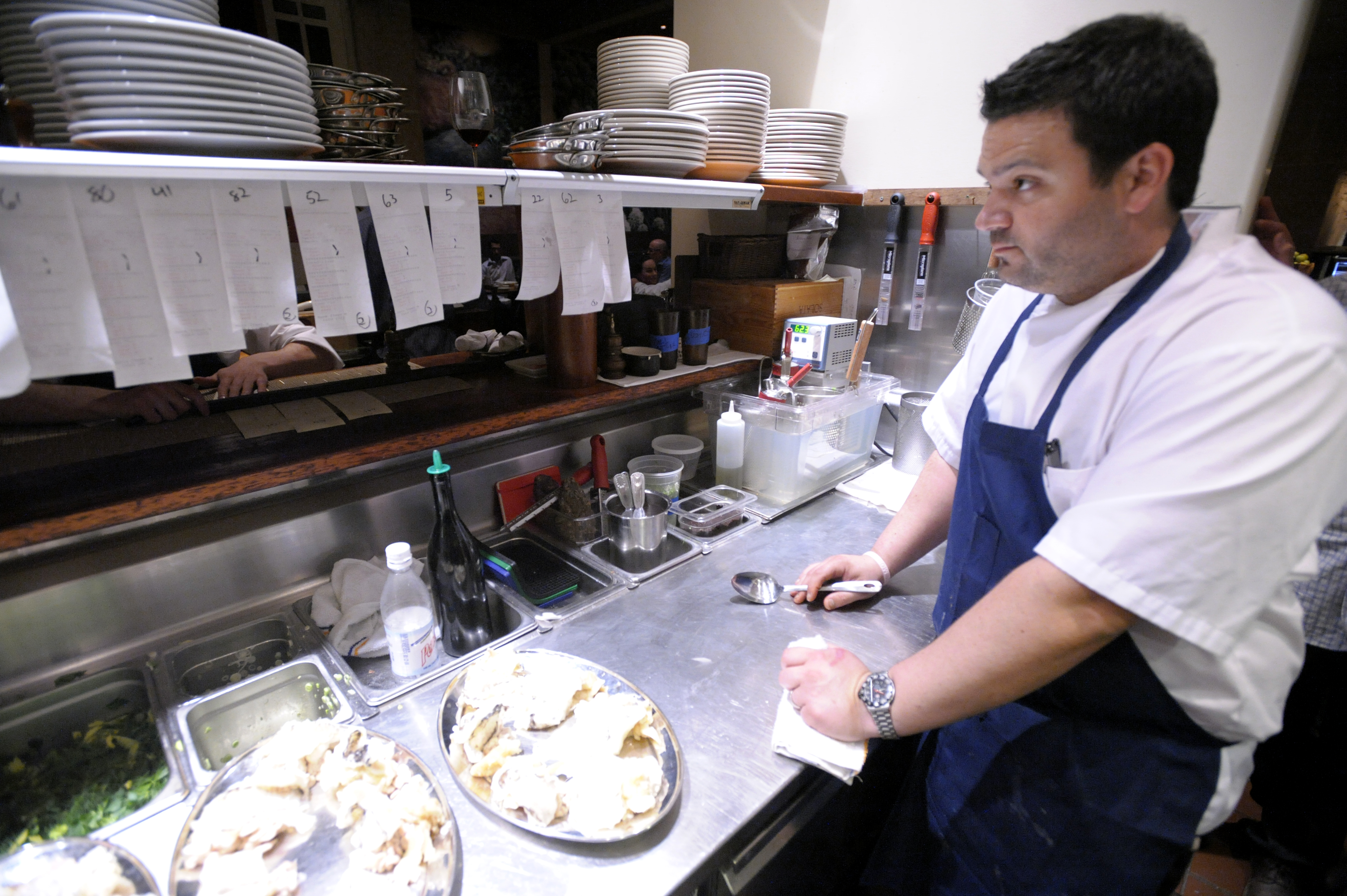
Thank you so much for the oppurtunity to work with you and your staff. I can’t begin to tell you how much I learned. It was what I expected and more. My experience in your kitchen allowed me to open up my restaurant even more to offal.
When I got back to my restaurant I came back with a new energy. I saw some amazing food at Incanto during my time there. From cutting edge food with the warm blood mousse to the peasant stlye porridge, an impresssive the combination, I feel a new push for myself and my staff to be the best we can. It was an experience I would not trade for anything and would love to do it again. It you ever need any help in anything I would love to be a part of it.
Thank you again for opening your kitchen to me.
Michael Hudman
Chef/Owner Andrew Michael Italian Kitchen.
Guts, Fame, and Exciting Tripe
July 6, 2010 on 9:20 pm | In Blog, Offal, Press | No CommentsI am always nervous when I read a review about what we do at Incanto. But this one was different, not because it was a good review, but because they understand what I am trying to do.

Guts, Fame, and Exciting Tripe
While Lessley was off investigating vegan Mexican food in the Mission, I was on the polar opposite journey, going to Chris Cosentino’s manly meat temple Incanto. Now, it would be easy to get all cynical and dismissive about the restaurant since the chef (and Food Network star) was in the dining room signing autographs and taking photos with some fans while I was eating, but why get all petty when the food can speak for itself, and it’s saying loud and clear: AWESOME.
 Case in point: a tripe stew. I’m not a tripe hater. I like it in pho, since it sort of acts, texturally, like a meat noodle, but I’m not excited about it. I ordered the grilled trippa appetizer for that reason, since Cosentino has really done a lot of work toward making offal more accepted (and even glamorous), and I wanted to see if it was possible to get excited about tripe. And it was. A bowl showed up with a deeply savory broth, tender slices of grilled tripe that tasted and chewed like a meaty mushroom, crunchy pieces of bacon, and a pile of ancho cress thrown on top that, when mixed in, wilted perfectly into the soup, giving it a nice peppery flavor. I was going back to it to sop it up with the bread.
Wine-wise, a fun idea was the “mystery flight” on the menu. Three generous pours arrived for $15. And I appreciated that the restaurant put a little paper tag around the base of each glass with the wine info printed on it, so you could actually take it home to remember it.
Over the top but delicious: a big slice of seared foie gras served on—wait, that wasn’t toasted bread—a breaded, fried trotter. Ridiculous, yes; delicious for sure. And the side of sliced strawberries, crunchy rhubarb, and tiny purslane leaves with a sweet/salty/tangy rhubarb mostarda showed a lot of love put into the nonmeat items, too.
Another game-changer for my prejudices: the stinging nettle and morel risotto. I think I’ve just had a lot of terrible, gluey risotto and now I avoid it. But in the spirit of the tripe, I ordered the thing I thought I’d like the least. It was the right move. Bright, bright green risotto arrived with a handful of morels on top. The nettle flavor was strong, giving the risotto a deep earthiness, which was intensified by the mushrooms. It was really, really rich and creamy. I will be going back for that dish.
The other thing that I was curious about was a mysterious “hayoli.” It was just what it sounded like: aioli made with oil that had been infused with hay. It tasted like extremely grassy olive oil, sharp and peppery. It was served dabbed on tender braised beef cheeks, which came with a tangled mass of salad made with shaved tongue, rucola greens, and peas … oh no, not peas at all. They were tiny, sour green grapes, which burst with a crazy intense acidity in the mouth: exactly what the rich dish needed, delivered in an unexpected way.
Incanto is a restaurant that can change your mind about foods you don’t think you like, and that’s a good thing. And really, who am I to judge things anyways, since I was the jerk shoving a camera into the risotto in a crowded restaurant? (Sorry, but I couldn’t bring myself to turn the flash on and be a real ass, so the pictures are not the best.)
Posted on Monday, July 5th, 2010 by Roxanne Webber
The gut bomb is here!!!
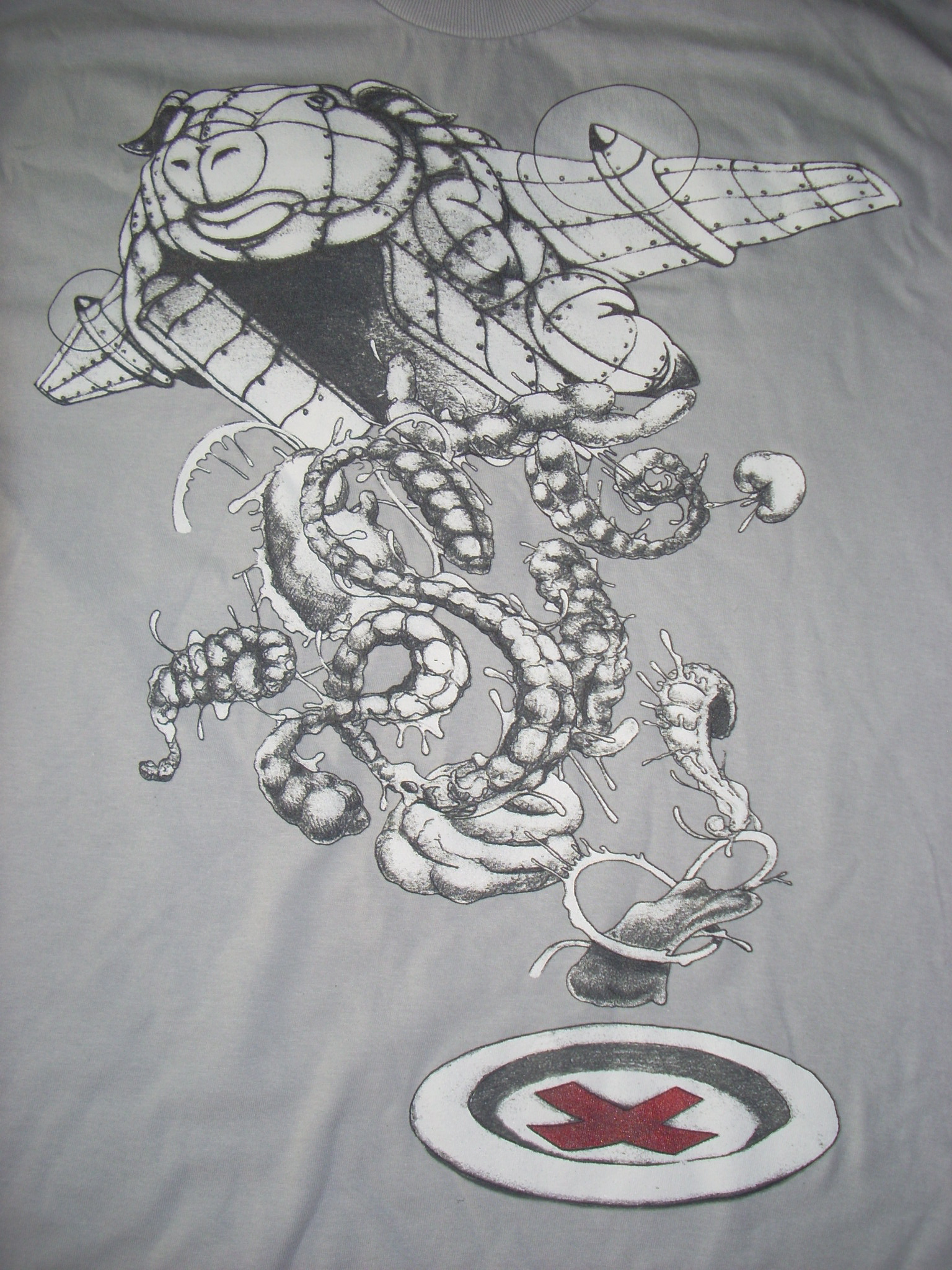
April 12, 2010 on 10:51 pm | In Blog, Offal | No CommentsAs promised the arrival of a new T-shirt is here. This is a one of kind image only for offal good, modeled after a
WW II bomber this tasty fella drops his bomb on the plate. Right where it belongs!! Check out the shop to purchase.
Pot calls the kettle black!!
March 10, 2010 on 2:35 pm | In Blog, Issues | 3 Comments
PETA’s Euthanasia Rates Have Critics Fuming

Do you have the guts 2.0 WINNERS
March 2, 2010 on 9:44 pm | In Blog, Events, Restaurants | 1 Comment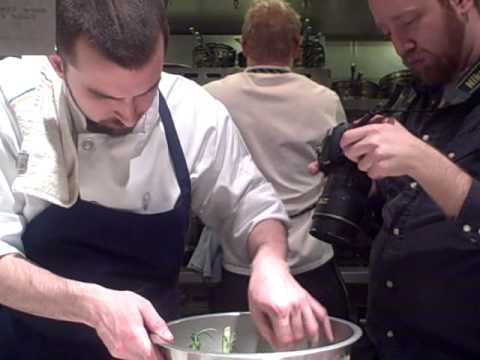
After recieving 50 applicants from all over the US and Canada I have made my final decisions on the 2 stages for this years head to tail dinner at Incanto. This was not an easy decision since there were so many great applicants with great essays and resumes. But there can only be 2 people there is only so much room in our kitchen. Thank you all for your interest in being a part of this annual event just because you didnt get it this time dosent mean you wont get it next year.
Below are the winners names and essays:
Michael Hudman chef/partner of Andrew Michael Italian Kitchen in Memphis Tennessee
Hello Chef, my name is Michael Hudman, chef and co-owner of Andrew Michael Italian Kitchen in Memphis, TN. I could tell you all about me and where I have worked in the past, but the main thing is I am very passionate about food and especially about nose to tail. Two years ago I opened my restaurant with my long time friend and business partner. We concentrate on bringing the best product we can to our customers. We are constantly trying to learn more and more everyday. When I first came across the offal good web site, it blew me away. There are not many restaurants or books that work offal ingredients or techniques. We have done a lot of trial and ERROR with offal, your web site has helped us improve. Last year we closed the restaurant down for a week and made a trip out to San Francisco and Napa. We ate at Incanto twice, the second time we did the Il Quinto Quarto menu and the dinner just stuck with me. (You even waited on a taxi cab for an hour with us, Thanks) It reminded me of the food my grandmother told me about as a kid and the food that we experienced in Italy while in school. At my restaurant we do a Nose to Tail dinner all with Newman Farm pork . We love pork and use it as much as we can, we are working on our charcuterie every day. Speaking of, I saw that y’all are making nduja, we have not had that since we were in Calabria. We are excited about tasting it next time we are in California. You have definitely inspired me to use more offal and push myself as a cook. It would be an honor to learn from you, thank you for your time and I hope to be able to help you and your staff on this year Nose to Tail dinner.
Jonah Resnick a line cook from Blackbird in Chicago
Cooking and working in a kitchen is a non-stop opportunity to learn and improve techniques on a daily basis. To have the chance to work in your kitchen for a week prepping and cooking the Head to Tail dinner would be one of those times where learning new techniques from you and your crew would be an honor. Eating and cooking offal and whole animal butchery is a passion of mine that I look to improve and get inspired by new ideas whenever the opportunity presents itself through other chefs, books, recipes, and blogs. I have worked in well-respected kitchens in both New York and Chicago so working long hours in the kitchen is nothing new for me. You would not have to be concerned with “baby sitting” me during the week. I would love the opportunity to do whatever was needed of me just keeping my eyes open learning the way you execute the Head to Tail dinner from start to finish. I currently work at Blackbird in Chicago where we focus on locally sourced produce and meats and turning them into upscale dishes. I have been there for a year and a half and have worked my way through all of the stations and continue to improve, learn, and help with menu development. Working for Paul Kahan and Chef de Cuisine Mike Sheerin has had a profound impact on me as a cook, as well as a chef, and I will carry the techniques, ideas, and philosophies on food with me for the duration of my career. However, I believe that traveling, eating, and experiencing other parts of the country and world is an invaluable part of becoming a well-rounded chef and cook. I was lucky enough to travel to San Francisco over the summer and experience the local food culture all over the Bay Area. I was blown away by places like the Ferry Building and the farmers market there, the produce, meat, and seafood available in one place blew my mind. While I was visiting the Bay Area I was lucky enough to eat dinner at Incanto and actually speak to you while eating at the bar. I had a wonderful meal there and really loved what you and your cooks were doing with food. Once I read that there was a chance to come there and cook the Head to Tail dinner I immediately jumped at the opportunity. That being said, please consider me for one of the two available positions to stage during the Head to Tail dinner. You will not be disappointed by my dedication and ability in the kitchen.
Skoal!!!!
March 2, 2010 on 12:51 pm | In Blog, Press | No Comments
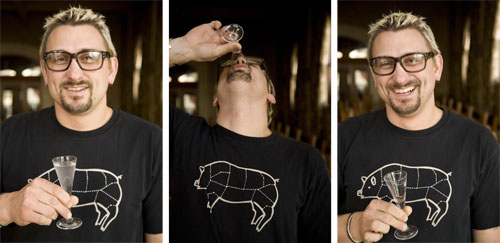
To have a shot of aquavit at 11am in the morning is not how I like to start my day, but when David Arnold called and asked me to do this shoot I jumped at the chance.His thought is you can learn a lot about a person from their skoal. Read below to learn about Skoal. Or go to Cooking Issues Website to see more Skoal photos and get the full treatment.
Straw man
March 1, 2010 on 11:37 am | In Blog, Press, Recipes | 2 CommentsHere is a great article written by my friend Daniel Patterson about cooking with hay. I could go on and talk about cooking with hay but I could never do it as well as daniel so I am going to leave it alone and let you read his well written piece .

Straw man
A barnyard staple takes a surprising turn in the kitchen.
It’s difficult to think of a product more symbolic of agrarian life than hay. As someone who has spent a fair amount of time tromping around farms, I’ve seen quite a bit of it—in barns, bundled in fields, used in displays—but I’d never thought of hay as a culinary ingre dient. Until now.
Hay is one of the most exciting and unexpected additions to my pantry in recent memory. It’s not a new idea, though: Hay has been used for centuries in French and Italian cooking, where large cuts of meat are buried in it and roasted either in the oven or in the dying embers of a fire.
In this country, hay has traditionally played a supporting role. The hay-box cooker has been used for more than 100 years, particularly during World War II as a way to conserve energy. The technology is simple: Bring a covered pot—preferably heavy metal or ceramic—full of food and liquid to a hard boil, then transfer it to a box packed with hay and cover it. The hay keeps the heat in the pot, so in four to eight hours, the stew will be cooked, sans fossil fuels.
From a practical standpoint, hay makes a great cooking medium, keeping heat in and diffusing temperature changes. But it’s the flavor that makes hay an extraordinary ingredient to work with. The taste is sweet and herbaceous, and the aroma is incredible, evocative of farms, pastures, and spaces vast and green and far removed from the city.
The idea came from a conversation with my sous-chef. We were trying to find a new way to cook carrots, and he recalled working in a restaurant in France where the chef cooked pork with consommé and hay for hours at a low temperature, until the meat was tender and the broth an elixir. It seemed like roasting carrots in hay would yield similarly delicious results, so the next weekend at the farmers’ market, I found myself shoving a gigantic bale of hay into the backseat of my car.
Back at the restaurant, we used the hay to made a stock. We burned some of the ends first, to give the stock deeper flavor, then covered the hay with water and let it simmer for about an hour. We tossed in young carrots with olive oil and salt, then combined them with hay and a little hay stock in a heavy enameled-iron pot and cooked them for about 30 minutes at 300°F, until they emerged tender and aromatic. It’s a simple process that can be done with any root vegetable.
Hay has made occasional appearances on American menus over the years. Chris Cosentino, the chef at Incanto, recalls a dish offered years ago at Red Sage, in Washington, D.C., where leg of goat was covered with a mixture of hay and clay, then baked—another traditional European technique. Cosentino, who was inspired to buy his own hay, first used it to cook a whole leg of pork. His menu currently features rabbit braised in hay that he serves with nettles and carrots. “People love the flavor,” Cosentino says, “and the aroma is amazing. Every time we pull one out of the oven, you can smell it across the dining room. It’s intoxicating.”
There’s not much to know about cooking with hay. The easiest way to use it is to throw a little into a stew as it simmers, then remove it before serving. If you roast with it, you should first soak the hay in water, then lay it down as a thick bed for the meat or vegetables. Burning the ends of the hay will give the dish subtle smokiness and depth. You can cover your main ingredient with the hay or not; adding a bit of liquid to the pot will ensure that it doesn’t burn. And if you’re considering eating the hay itself, I wouldn’t. The flavor is great, but unless you’re a farm animal, the texture leaves much to be desired.
Most farms and farm-supply stores carry hay, but because you’ll use it in direct contact with food, make sure it hasn’t been treated with chemical pesticides. And beware: Before you place your order, stake out some serious storage space. A bale of hay is enormous.
At Coi, we haven’t made much of a dent in our stash, which means that there will be hay on the menu for quite a while. So far, we’ve infused oil with hay and used it to confit suckling pig, reserving some of the oil to drizzle into the sauce. We’ve ground salt and hay together to make a crust for beets. We’ve infused it into onion soup, its presence magically transforming a standard flavor into something fascinating and delicious. Hay might not be the same workhorse in the kitchen that it is on the farm, but in my pantry, hay has found a comfortable second home.
CHRIS COSENTINO’S
Rabbit braised with hay
The chef at Incanto likes to poach baby carrots in the braising liquid to serve alongside the rabbit.
INGREDIENTS
2 2½- to 3-lb. rabbits, each divided into six pieces
Salt and freshly ground black pepper
½ cup flour
3 Tbsp. olive oil
1 onion, peeled and cut in half
1 carrot, peeled and cut in half
1 head fennel, cut in half
1 head garlic, cut in half
½ cup white wine
1 fresh bay leaf
1 handful of hay
2 qt. chicken stock
DIRECTIONS
1. Heat the oven to 250°F. Season rabbit pieces with salt and pepper, then dust lightly with flour.
2. In a Dutch oven, heat the oil over medium heat. Sear the rabbit pieces one or two at a time, taking care not to crowd the pan. When the pieces are golden brown, remove and set aside.
3. Add the vegetables and cook until they just begin to brown.
4. Add the wine, bring to a boil, reduce to a simmer, and let cook until it’s reduced to about 2 tablespoons, occasionally scraping the bottom of the pan to loosen any browned bits.
5. Add the bay leaf and hay. Set the rabbit pieces on top of the hay, add the chicken stock, cover the pan, and braise in the oven until the rabbit is tender, about 1½ hours.
6. Transfer the rabbit pieces to a platter and serve warm.
Makes 6 servings
Daniel Patterson is the chef-owner of Coi and a partner at Cane Rosso.

Categories:
Archives:
- February 2013 (1)
- April 2012 (2)
- March 2012 (1)
- January 2012 (1)
- July 2011 (3)
- June 2011 (6)
- May 2011 (3)
- March 2011 (1)
- February 2011 (2)
- July 2010 (2)
- April 2010 (1)
- March 2010 (4)
- February 2010 (5)
- January 2010 (1)
- December 2009 (2)
- November 2009 (4)
- August 2009 (4)
- July 2009 (9)
- June 2009 (1)
- April 2009 (4)
- March 2009 (5)
- February 2009 (5)
- January 2009 (7)
- December 2008 (11)
- November 2008 (8)
- October 2008 (7)
- September 2008 (4)
- August 2008 (1)
- July 2008 (4)
- May 2008 (3)
- April 2008 (4)
- March 2008 (2)
- February 2008 (5)
- January 2008 (6)
- December 2007 (5)
- November 2007 (6)
- October 2007 (4)
- September 2007 (3)
- August 2007 (3)
- July 2007 (1)
- June 2007 (1)
- May 2007 (2)
- April 2007 (1)
- March 2007 (2)
- January 2007 (2)
- December 2006 (5)
- November 2006 (2)
- October 2006 (2)
- September 2006 (2)
- August 2006 (4)
- July 2006 (5)
- June 2006 (11)
 Become a Fan
Sign Up:
Powered by WordPress
Entries and comments feeds.
Valid XHTML and CSS. ^Top^